
Classic and Exotic Car Shipping
A classic, antique, or exotic vehicle isn't just transportation, and shipping it shouldn't be treated like shipping any other car. Here's what's actually different about the process.
Enclosed Transport Is the Default, Not an Upsell
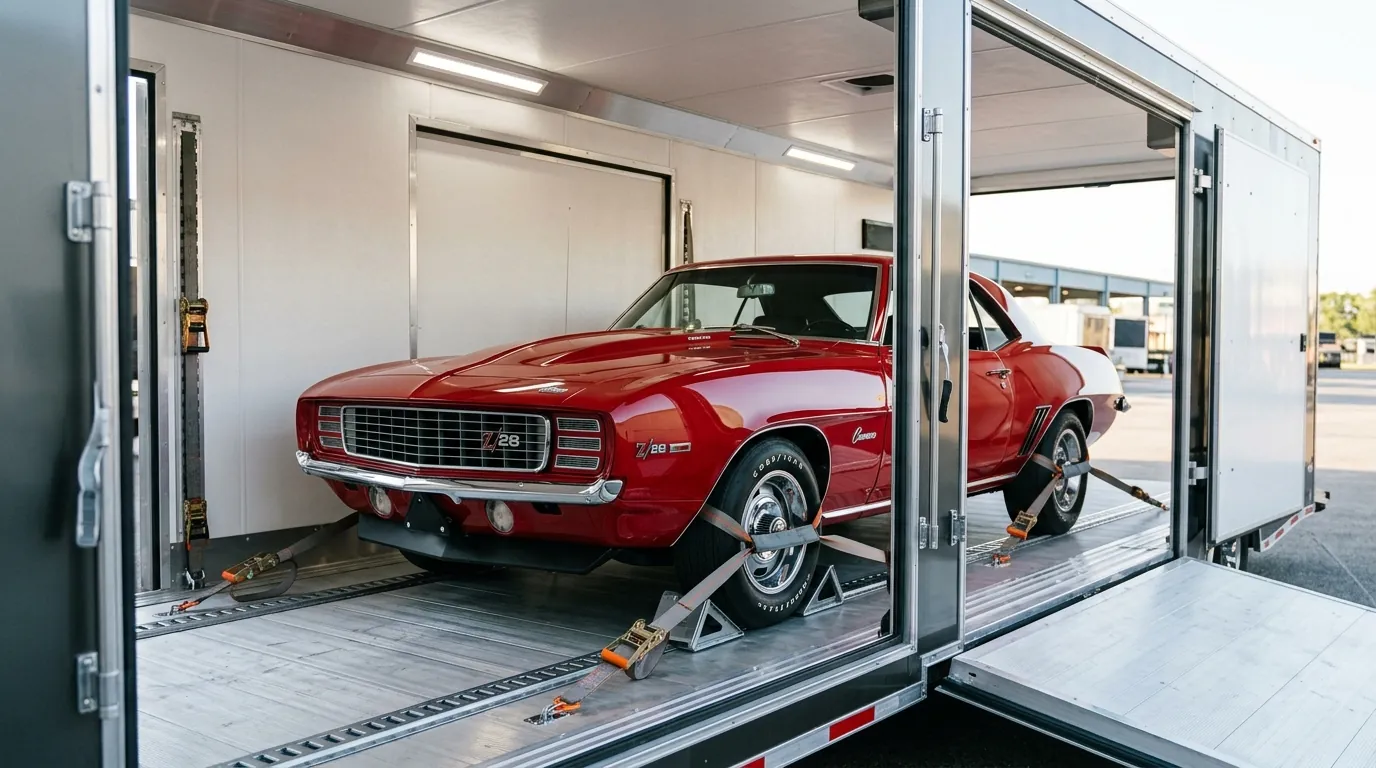
For most vehicles, enclosed transport is an optional upgrade. For classics, antiques, and exotics, it's the standard choice for good reason: complete protection from rain, road debris, and dust for a vehicle where original paint, trim, and often irreplaceable parts are genuinely at risk. Open transport works fine for a daily driver; a scratched restoration project or a chipped original paint job is a different kind of loss entirely.
Many enclosed carriers also use hydraulic lift gates rather than standard ramps, which matters if your vehicle has low ground clearance, a common trait in classic sports cars and exotics, and would otherwise risk scraping on a standard ramp.
Insurance Coverage That Matches the Vehicle's Value
Standard open-carrier cargo insurance policies aren't built around a six- or seven-figure vehicle. Enclosed carriers commonly offer significantly higher declared-value coverage, often well above what a standard policy provides, which matters directly if your vehicle's worth goes beyond typical daily-driver territory. This is worth confirming directly for your specific vehicle rather than assuming a standard policy covers it adequately.
To learn how carrier cargo insurance and broker bonding work together, see our full licensing and insurance guide.
Shipping a Non-Running Classic
Project cars and restorations that don't currently run ship regularly, using a winch, flatbed, or forklift depending on whether the vehicle still rolls, steers, and brakes. The surcharge for this is typically modest, generally in the $100 to $200 range on top of the enclosed transport cost, smaller than many people expect. What matters most is disclosing the exact condition upfront so the right equipment gets sent. See our full guide to shipping a non-running vehicle
The 25-Year Import Rule
If you're importing a foreign-market classic into the United States, vehicles 25 years or older generally qualify for a federal exemption from standard U.S. safety compliance requirements, which is why 25-year-old JDM and European classics become widely importable right at that threshold. This rule is specific to bringing a vehicle into the U.S. and is separate from any Gulf country's own age rules for vehicles leaving the U.S., which work differently and in some cases the opposite direction (the UAE and Bahrain, for example, generally restrict vehicles above a certain age rather than specifically permitting older ones). If you're shipping a classic internationally rather than importing one into the U.S., check the specific destination country's guide rather than assuming the U.S. 25-year rule applies there too. See our UAE shipping guide See our Bahrain shipping guide
Shipping Internationally
A genuine classic headed to the Gulf doesn't automatically fall under standard vehicle age restrictions. The UAE, for instance, generally limits standard cars to 5 years (up to 10 for luxury or exotic models) and registers classics over 30 years old under specific classic plates, and Bahrain's standard 5-year limit has a similar approved-classic exception. If you're shipping a classic internationally, this is worth raising directly rather than assuming either way, since the exception process and documentation needed varies by destination. See our full guide to international and Gulf shipping
Who It's Best For
This page is for you if your vehicle is a genuine classic, antique, exotic, or high-value restoration where full protection and appropriate insurance coverage matter more than shaving cost off the shipment. If you're shipping a standard daily driver, even an older one, open transport is almost certainly the better value, and this level of protection likely isn't necessary.
Frequently Asked Questions
Do I have to use enclosed transport for a classic car?
No, but it's the standard choice for good reason: complete protection from weather and road debris for a vehicle where paint, trim, and parts genuinely matter. Open transport is technically available, but most owners of classic or high-value vehicles choose enclosed specifically to avoid that risk.
Can I ship a non-running classic car?
Yes, this is one of the more common enclosed transport scenarios. You'll need to disclose the exact condition (whether it rolls, steers, and brakes) so the right loading equipment, winch, flatbed, or forklift, is arranged.
What is the 25-year import rule?
It's a federal exemption that generally allows vehicles 25 years or older to bypass standard U.S. safety compliance requirements when imported into the country. It applies specifically to importing a vehicle into the U.S., not to shipping a vehicle out of the U.S. to another country.
Can I ship a classic car internationally, including to the Gulf?
Generally yes. Most Gulf countries have a separate exception process for genuine classics even though they restrict the import age of standard vehicles. This is worth confirming directly for your specific vehicle and destination. See our Gulf shipping guides
How much more does enclosed transport cost for a classic car?
It follows the same general enclosed-transport premium as any vehicle, typically a meaningful increase over open transport, plus a modest non-running surcharge if applicable. See our full enclosed transport guide
Shipping a classic, antique, or exotic vehicle?
Get a quote and we'll walk through the right transport and insurance setup for your specific car.