
What It Is
Door-to-door shipping means a transport driver picks up your vehicle from your specified address (home, office, or wherever you've arranged) and delivers it directly to the destination address, without routing through a storage terminal in between. It's the opposite of terminal-to-terminal shipping, where you'd drop off and collect the vehicle at a shipping hub yourself.
The tradeoff is straightforward: door-to-door costs a bit more than terminal-to-terminal, because the driver spends time navigating to specific addresses rather than making a single stop at a central hub. For most people, that convenience is worth the difference.
How It Works, Step by Step
You share your pickup and delivery addresses, vehicle details, and preferred timing.
Once you accept a quote, you receive an estimated pickup window, typically a few days wide, since the driver is coordinating multiple stops along a route.
Clean the car, remove personal items beyond what's allowed (up to 100 lbs can stay in the vehicle), and keep roughly a quarter tank of fuel.
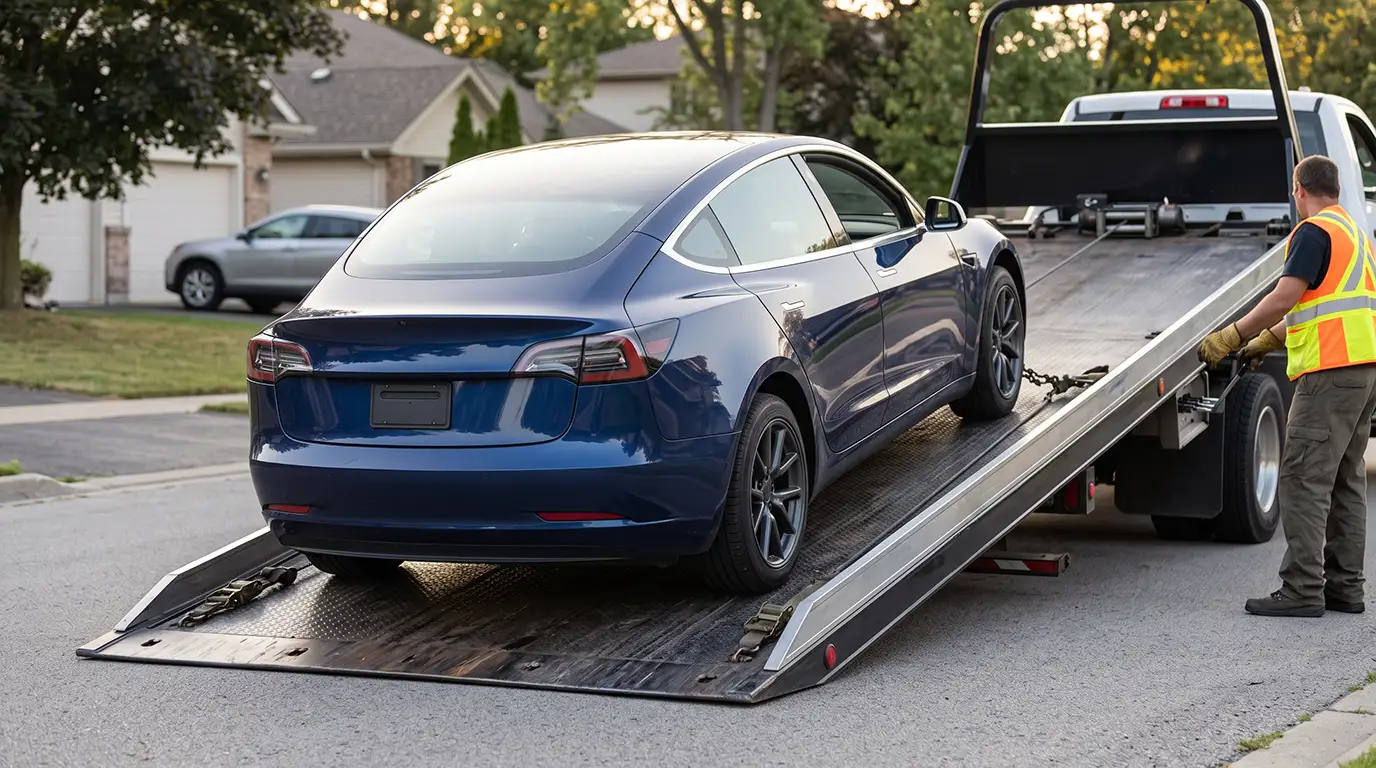
The driver meets you at your address, or, if your street is too narrow for a large transport truck, at the nearest safe wide road nearby. You both inspect the vehicle and sign a Bill of Lading documenting its condition.
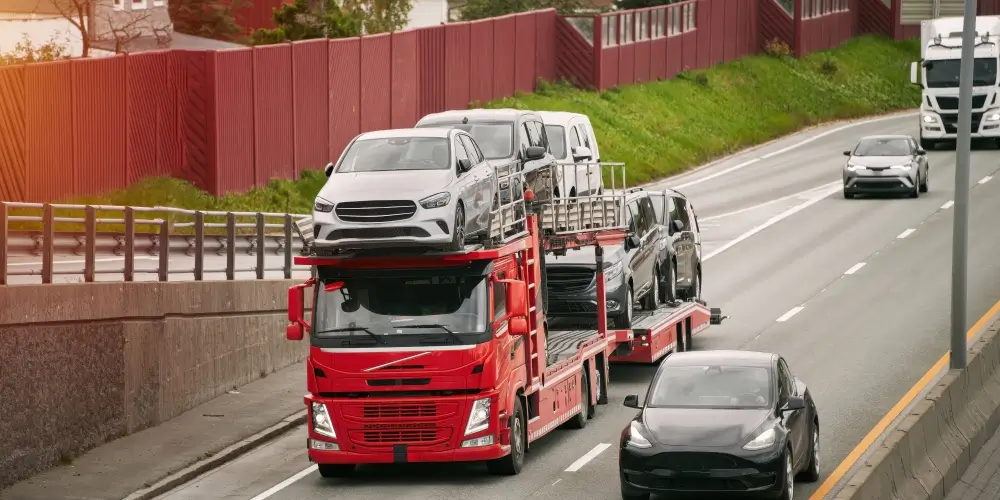
The car travels on an open or enclosed trailer, typically covering 400 to 500 miles a day on longer routes. Most trips within the continental U.S. take roughly 6 to 12 days depending on distance.
The driver unloads at your destination address (or the nearest accessible spot), you inspect the vehicle together, and you sign the final paperwork.
What to Have Ready
A little preparation on pickup and delivery day keeps things moving:
Clear access
If you're on a narrow residential street, expect the driver to request a nearby wider road for the actual loading. An 80-foot transport truck often can't navigate tight turns or overhanging trees.
Someone present
You or an authorized person needs to be there for both inspection and signature at pickup and delivery.
Documentation
Your title or registration, and a notarized letter from your lienholder if the vehicle is financed.
A realistic window, not an exact time
Door-to-door doesn't mean a scheduled appointment time. It means direct delivery to your address, within the agreed pickup and delivery window.
Door-to-Door vs. Terminal-to-Terminal
The core tradeoff is convenience versus cost. Door-to-door means no extra trip to a shipping hub on either end; the driver comes to you. Terminal-to-terminal asks you to drop off and pick up the vehicle at a designated location, which removes the driver's local navigation time and is typically the cheaper of the two. If your schedule allows for the extra step and budget is the priority, terminal-to-terminal is worth asking about. If convenience matters more, door-to-door is the standard choice for good reason. See how to ship a car for less
Who It's Best For
Door-to-door is the right default for most people shipping a car: anyone who wants the least hands-on process, doesn't have easy access to a terminal near their pickup or delivery point, or is coordinating a move where every extra errand adds real friction. It's especially worth choosing if you're shipping to or from a location where the nearest terminal is genuinely inconvenient, since the cost difference from terminal-to-terminal often isn't large enough to justify the extra trip.
Terminal-to-terminal is worth considering instead if minimizing cost is the priority and you have reasonably easy access to a shipping terminal on both ends. Snowbirds and others shipping on a predictable seasonal schedule sometimes choose this route specifically to save on the door-to-door premium. See how to ship a car for less.
Frequently Asked Questions
Clear answers to common questions about door-to-door vehicle delivery.
Does the driver really come to my exact address?
In almost all cases, yes. The exceptions are streets too narrow or obstructed for a large transport truck to safely navigate, in which case the driver will ask to meet at the nearest accessible wide road, usually just a block or two away.
How much more does door-to-door cost than terminal-to-terminal?
The difference reflects the driver's added local navigation time on each end, and varies by route. Door-to-door is the more commonly chosen option specifically because the convenience is usually worth it.
Can I leave items in the car for a door-to-door shipment?
Up to 100 lbs of personal belongings can stay in the vehicle, kept in the trunk rather than visible through the windows. Anything beyond that adds weight the carrier isn't equipped to load safely, and items left in the vehicle typically aren't covered by cargo insurance.
What if I'm not available at the scheduled pickup time?
You'll need someone present, you or an authorized person, to inspect the vehicle and sign the Bill of Lading at both pickup and delivery, since that document is what protects you if the vehicle's condition is ever in question later.
Ready to schedule door-to-door delivery?
Get a quote and we'll confirm pickup and delivery details specific to your addresses and vehicle.