
Enclosed Car Transport
Enclosed transport is the higher-cost, higher-protection option for shipping a vehicle, and for the right car, it's not a luxury, it's the sensible default. Here's what it actually involves and how to know if it's worth it for yours.
What It Is
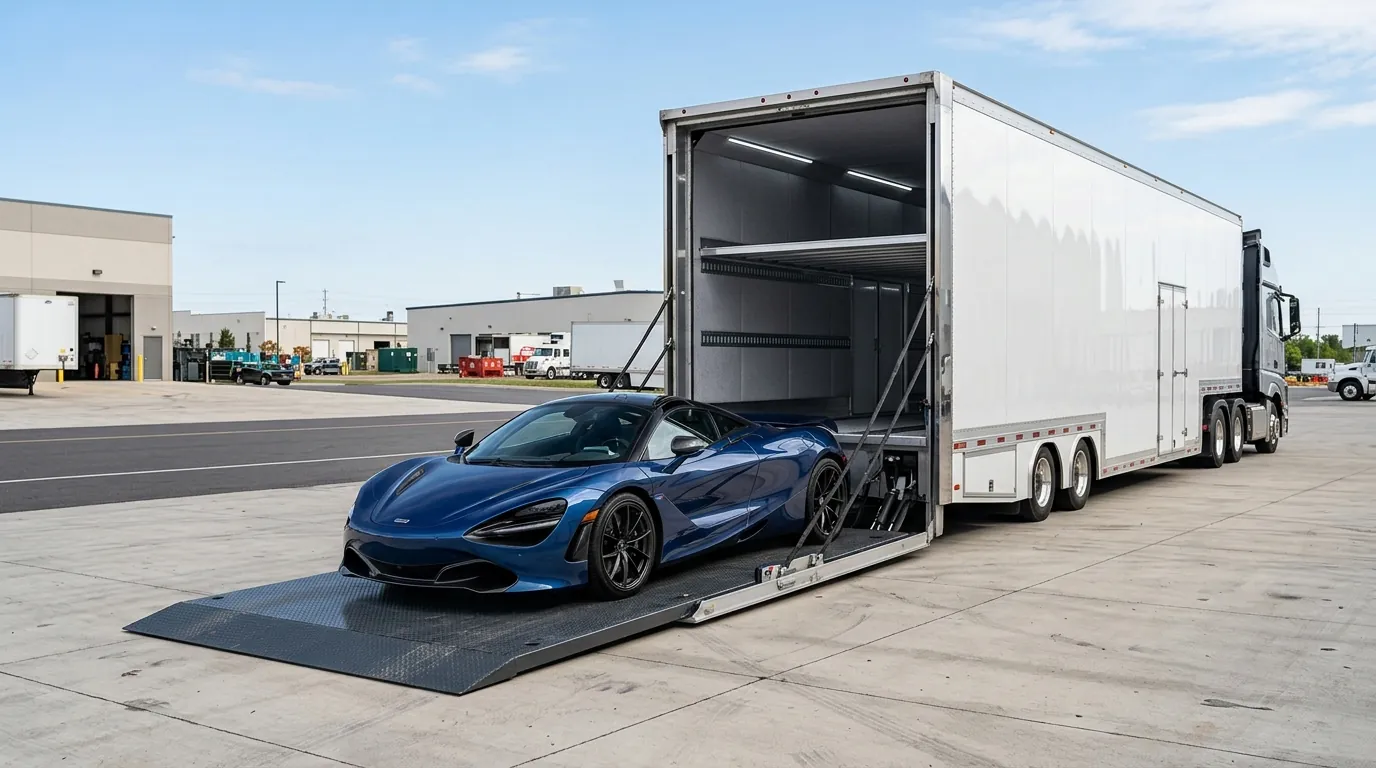
Enclosed transport moves your vehicle inside a fully covered trailer, completely shielded from rain, snow, hail, road debris, and dust for the entire trip. Unlike open transport, where your car rides exposed on a multi-car trailer, an enclosed trailer typically carries just a handful of vehicles, often two to six, with far more individualized handling.
That lower capacity is exactly why it costs more. The carrier's costs are spread across fewer vehicles per trip, and enclosed trailers are less common on the road, so scheduling can take a little longer than open transport.
How It Works
The process mirrors open transport in structure: quote, booking, pickup with a signed Bill of Lading, transit, and delivery, with specialized equipment and handling specific to enclosed shipments.
Loading equipment
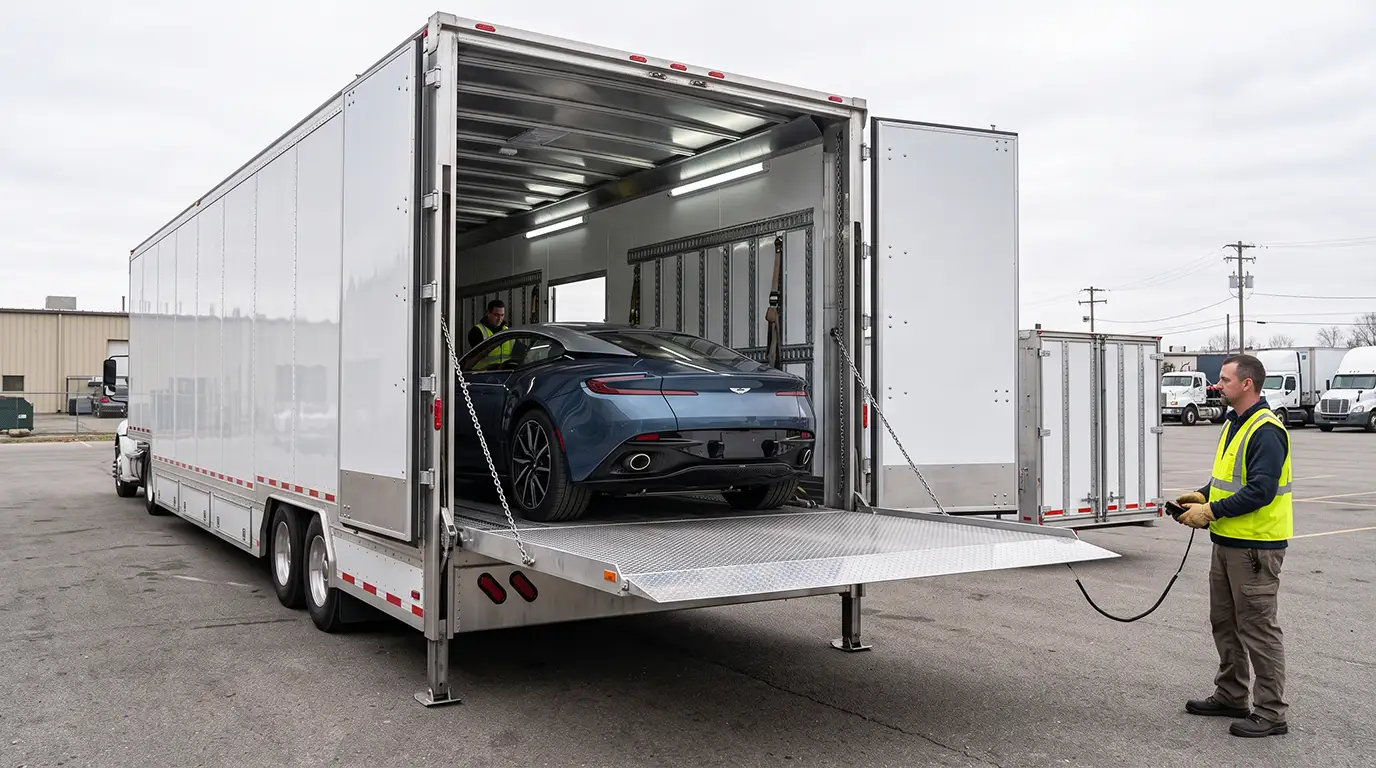
Many enclosed carriers use hydraulic lift gates rather than standard ramps, which matters if your vehicle has low ground clearance and would otherwise risk scraping.
Fewer stops per load
Because trailers carry fewer cars, your vehicle typically sees less handling and fewer loading and unloading cycles along the route.
Higher declared-value coverage
Enclosed carriers commonly offer significantly higher cargo insurance limits than standard open-carrier policies, often into seven figures for genuinely high-value vehicles, which matters if your car's worth goes well beyond what a standard policy would cover.
What Affects the Price
The same underlying factors that move open transport pricing apply here (distance, season, route, and flexibility), plus a few that matter more for enclosed shipments specifically:
Base premium over open transport
Enclosed transport consistently costs meaningfully more than open for the same route, reflecting the lower vehicle count per trailer.
Vehicle value and insurance needs
Higher declared value can mean a higher-coverage policy, which factors into cost.
Non-running or "project car" status
A non-running classic or project car typically carries a modest surcharge on top of the enclosed premium, since it needs specialized loading regardless of trailer type.
Availability
Because there are fewer enclosed trailers on the road than open ones, less flexible pickup windows can push pricing up further than they would for open transport.
Who It's Best For
Enclosed transport is the right call, not an indulgence, for:
- Classic and antique vehicles, where original paint, trim, and often irreplaceable parts are at real risk from road debris and weather exposure. See our classic and exotic car shipping guide
- Exotic and luxury vehicles, generally in the $75,000-and-up range, where custom finishes and high-end bodywork justify the added protection.
- Vehicles with low ground clearance, like sports cars, where standard ramp loading risks scraping the undercarriage.
- Any vehicle where the cost of full protection is genuinely smaller than the cost of the risk. A scratched daily driver is an inconvenience. A scratched restoration project is a different kind of loss.
If none of that describes your vehicle, open transport is very likely the better value.
Book Further Ahead Than You Would for Open Transport
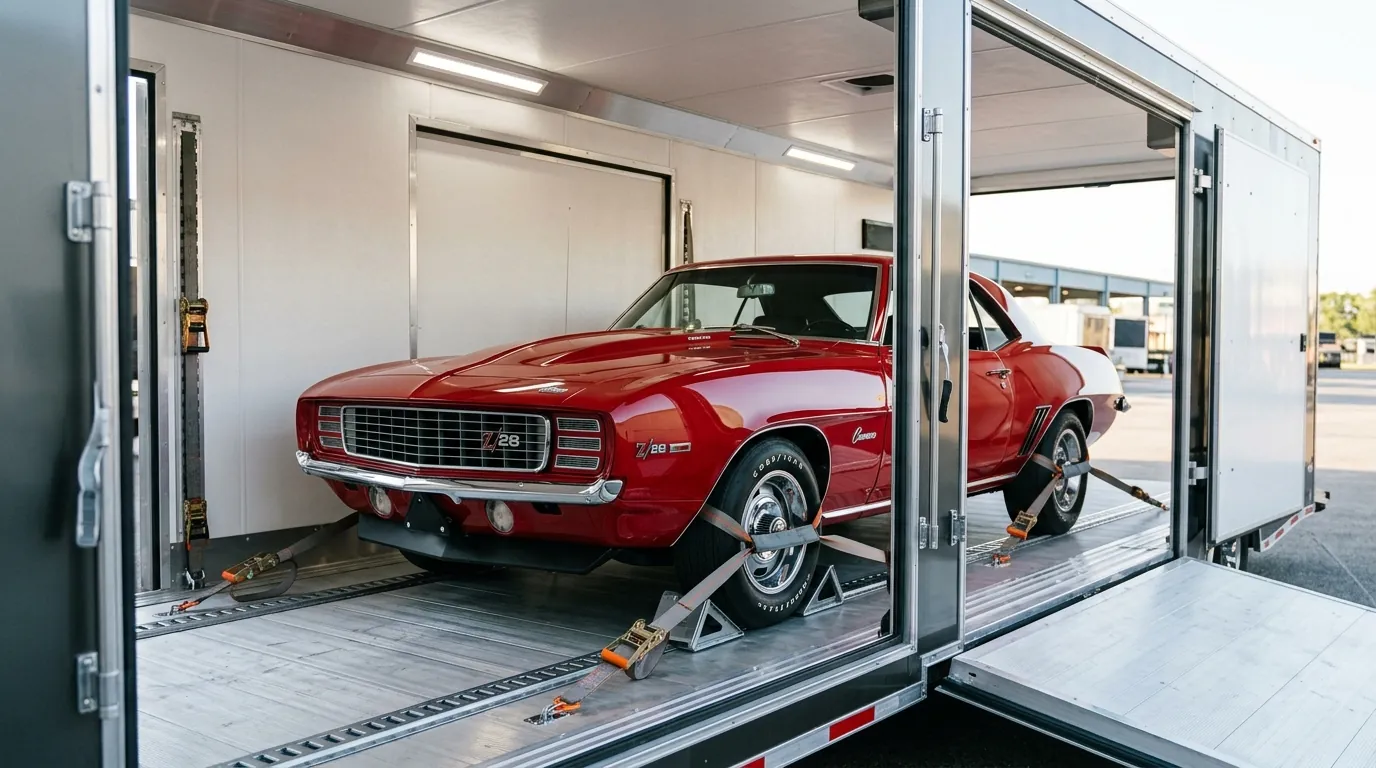
Because enclosed trailers are less common on the road, availability is genuinely tighter than for open transport, especially during peak moving season in late spring and summer.
If you know you'll need enclosed shipping, booking with more lead time than you'd give an open-transport shipment gives you a better shot at your preferred pickup window rather than having to wait for the next available trailer.
Frequently Asked Questions
Clear answers to common questions about enclosed auto transport services.
Is enclosed transport worth the extra cost?
For classic, exotic, luxury, or low-clearance vehicles, generally yes. You're paying for complete protection from weather and road debris, not just a nicer trailer. For a standard daily driver, the extra cost usually isn't necessary.
How much more does enclosed transport cost than open?
It's typically a meaningfully higher premium over open transport on the same route, driven mainly by the lower number of vehicles a carrier can haul per trip. The exact difference depends on your route and vehicle.
Can I ship a non-running classic car enclosed?
Yes. This is one of the more common enclosed transport scenarios. You'll need to disclose the exact condition (whether it rolls, steers, and brakes) so the right loading equipment is arranged. See our non-running vehicle shipping guide
Do enclosed carriers offer more insurance coverage?
Many do, with policy limits well above what standard open-carrier coverage provides. It's worth asking about directly if your vehicle's value is significant, since coverage details vary by carrier and by the specific vehicle being shipped.
Have a vehicle that deserves enclosed protection?
Get a quote based on your specific car and route.