
How Car Shipping Works: A Complete Guide
If you've never shipped a car before, the process is more straightforward than it looks. The terminology and the pricing can feel opaque if nobody explains the actual mechanics. This guide covers what happens from booking to delivery, what actually drives the cost, and how to tell a legitimate transport company from one that isn't.
The Four Ways a Car Gets Shipped
Every auto transport option is really a combination of two choices: how the car is loaded, and where it's picked up and dropped off.
Open transport
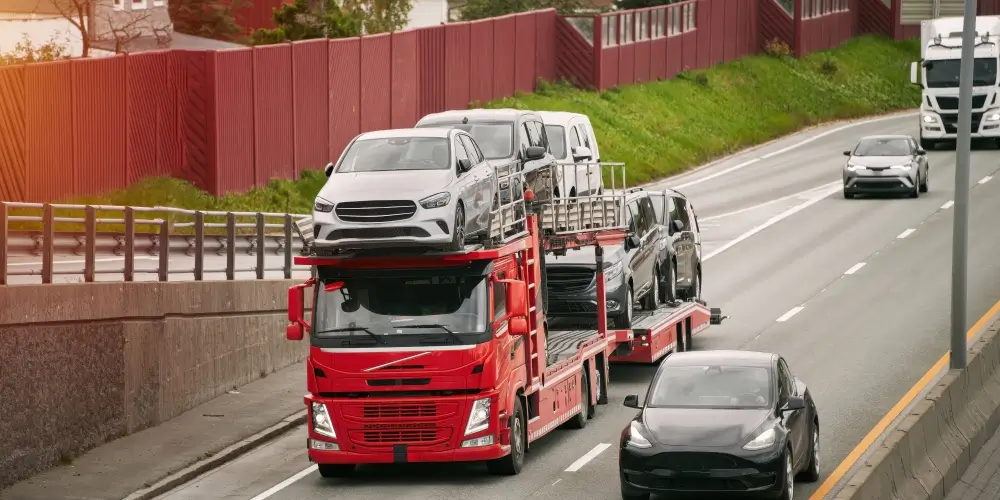
Open transport is the industry standard. Your vehicle rides on a multi-car trailer alongside several others, exposed to weather and road dust like any car on the highway. It's the most widely available option and the most affordable, because the carrier is splitting fuel and driver costs across every vehicle on the load.
How open car transport worksEnclosed transport
Enclosed transport puts your car inside a fully covered trailer, shielded from rain, road debris, and dust. It costs more, since carriers haul far fewer vehicles per trip, so the cost per car is higher. It's the standard choice for classic, exotic, and other high-value vehicles where full protection matters more than price.
Door-to-door delivery
Door-to-door delivery means a driver picks up your car at your home or office and delivers it directly to the destination address. It's the more convenient option and the one most people choose, though on a narrow street the driver may ask you to meet at the nearest safe wide road for pickup or delivery.
How door-to-door car shipping worksTerminal-to-terminal shipping
Terminal-to-terminal shipping has you drop off and collect your vehicle at a secure shipping hub instead. It's less convenient, but it's genuinely the cheapest lever available to you if budget matters more than convenience, since it removes the driver's local navigation time entirely.
What Actually Happens, Step by Step
Get a quote.
You share pickup and delivery addresses, vehicle details, and your preferred timing. Every shipment's actual price depends on the vehicle, the route, and current carrier availability, so we quote based on your specific situation and give you a real number to work with.
Book and schedule.
Once you accept a quote, you're given a pickup window, typically a few days wide, since drivers are coordinating multiple pickups along a route.
Prepare the vehicle.
Clean the car, remove personal items, and leave roughly a quarter tank of fuel. Up to 100 lbs of personal belongings can stay in the vehicle; more than that adds weight the carrier isn't equipped to load safely.
Pickup day.
The driver inspects the car with you and you both sign a Bill of Lading, a condition report that protects you if anything changes in transit.
Transit.
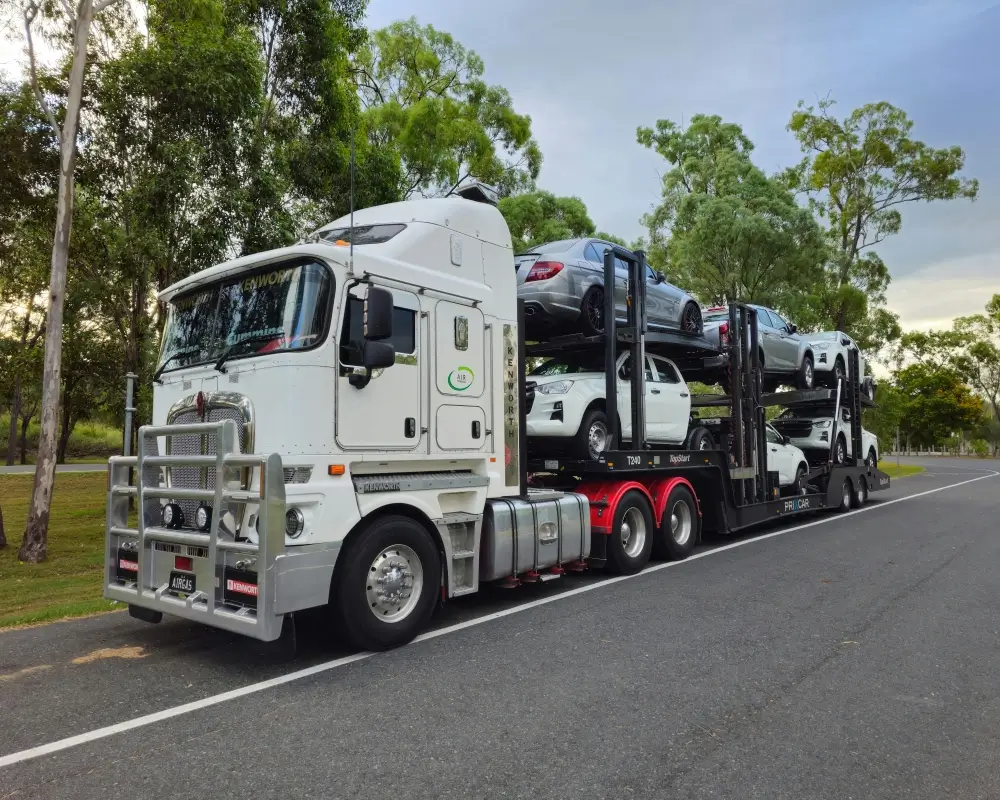
Your vehicle travels by open or enclosed carrier. Most cross-country routes cover roughly 400 to 500 miles of driving per day, so a 3,000-mile shipment typically takes 7 to 12 days of active transit, or 9 to 17 days total once you factor in the pickup window.
Delivery.
The driver unloads at your destination, you inspect the vehicle together, and you sign off on the final paperwork.
What Actually Drives the Price
There's no single number that applies to every shipment, but the same handful of factors move the price on every route:

Distance
Per-mile cost drops as distance increases. A short regional move costs more per mile than a cross-country one, because fixed costs like loading and driver time are spread over more miles on longer routes.
Open vs. enclosed
Enclosed transport consistently runs meaningfully higher than open, the tradeoff for full weather and debris protection.
Vehicle size and condition
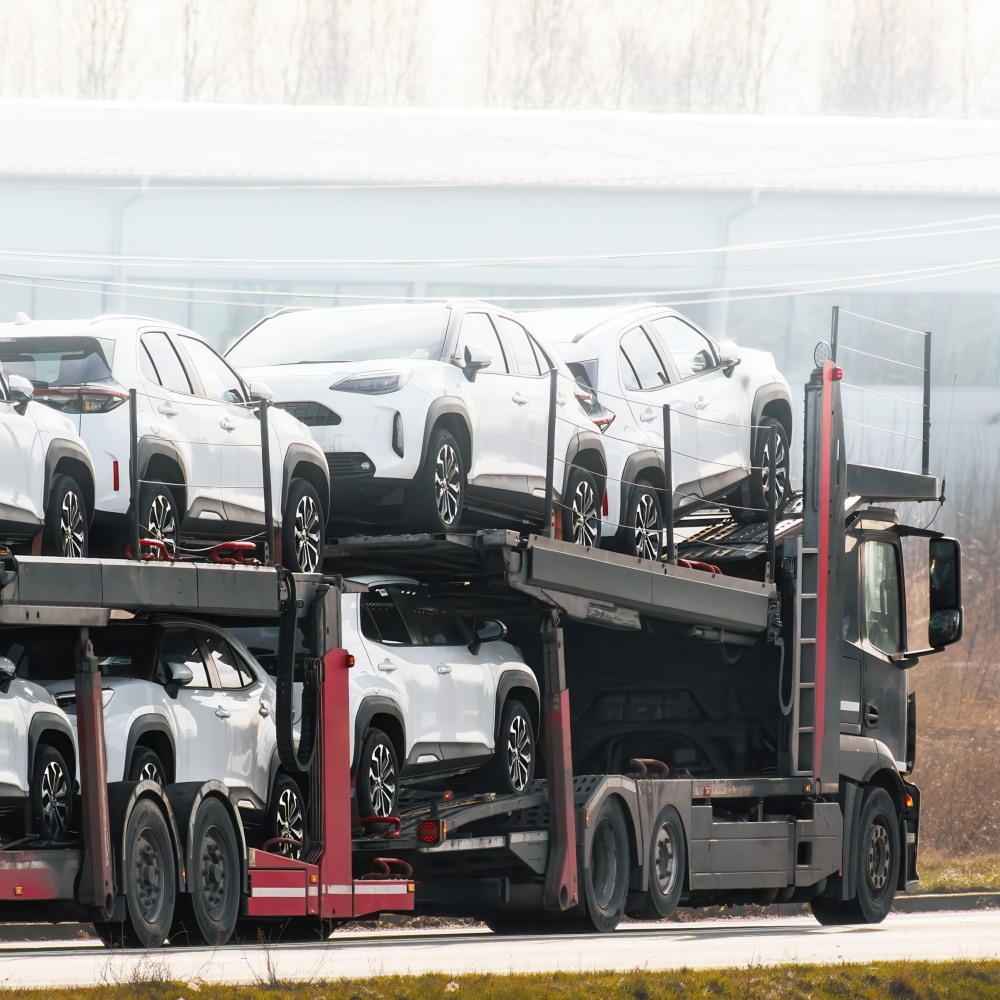
SUVs and trucks cost more to move than a standard sedan simply because they take up more trailer space. A non-running vehicle costs more too, since it requires a winch, flatbed, or forklift instead of driving on under its own power.
See our guide to shipping a non-running vehicleSeason
Winter, particularly January and February, is consistently the cheapest time to ship, since fewer people are relocating. Late spring through fall, especially the snowbird migration season, is the most expensive.
Route and location
Shipments between major metro areas on well-traveled interstates cost less than routes to rural or remote pickup points, where a driver has to go out of their way.
Flexibility
Giving a 2 to 3 day pickup window instead of an exact date lets a driver fit your vehicle efficiently into an existing route, which typically works in your favor on price.
What You Can Ship
Standard sedans, SUVs, and trucks make up most shipments, but the process adapts for almost anything with wheels:
Classic, exotic, and luxury vehicles
Classic, exotic, and luxury vehicles typically go by enclosed transport as the default rather than an upsell, and can carry significantly higher declared-value insurance coverage. Vehicles 25 years or older also fall under a separate import exemption if you're bringing one in from overseas.
See our classic and exotic car shipping guideNon-running or salvage vehicles
Non-running or salvage vehicles ship using a winch, flatbed, or forklift depending on whether the car still rolls, steers, and brakes. You'll just need to disclose the exact condition upfront.
Full guide to shipping a non-running vehicleMotorcycles
Motorcycles ship on their own smaller carriers, with pricing and timing that follow a similar seasonal pattern to cars: cheaper in the off-season, roughly October through April.
See our motorcycle shipping guideRVs
RVs are a different animal entirely. Motorized RVs can sometimes be moved "drive-away" by a professional driver rather than towed, which is often cheaper per mile than a standard tow-away or flatbed move.
See our RV shipping guideBoats
Boats ship overland by trailer, under their own power by a delivery captain, or overseas by RoRo or container. Any vessel wider than 8'6" at the beam is legally an oversize load requiring its own state permits.
See our boat shipping guideElectric vehicles
Electric vehicles ship the same way as any other car, with one real difference worth knowing: battery weight adds to the shipment's overall cost the same way a heavier SUV or truck would, and carriers handle EVs with specific attention to battery state-of-charge for safety during transit.
Heavy equipment
Heavy equipment, construction and industrial machinery, ships via specialized flatbed carriers built for oversized, overweight loads.
See our heavy equipment shipping guideTiming Matters More Than Almost Anything You Control
Seasonal movers, such as winter residents heading south in the fall and back north in the spring, create the highest demand and the highest prices in those migration windows, so booking early matters most there. Anyone relocating for work or school benefits from the same habits: book outside the peak rushes, and stay flexible on pickup dates, since that's where the real savings are.
See New York to Florida for a seasonal lane in detailPopular Routes
Some corridors have their own seasonal patterns, price ranges, and local requirements, and the same route often costs differently in each direction. Browse all routes and typical costs. Explore our dedicated corridor and state destination guides:
Florida Corridors
Guide to shipping to FloridaFlorida Destination Hub
Statewide rates & rulesCalifornia to Florida
Coast-to-coast corridorNew York to Florida
East Coast snowbird laneNew Jersey to Florida
I-95 corridor guidePennsylvania to Florida
Mid-Atlantic snowbird laneVirginia to Florida
I-95 & Auto Train comparisonOhio to Florida
Midwest southbound laneMichigan to Florida
I-75 corridor guideIllinois to Florida
Chicago to Florida transitMassachusetts to Florida
New England snowbird laneTexas to Florida
I-10 Gulf corridorFlorida to New York
Northbound spring surgeFlorida to Texas
Westbound Gulf laneTexas Corridors
California and the West
Guide to shipping to ArizonaArizona Destination Hub
Statewide rates & rulesCalifornia to New York
Coast-to-coast routeNew York to California
Westbound coast-to-coastCalifornia to Washington
I-5 Pacific corridorWashington to California
Southbound I-5 routeCalifornia to Arizona
1 to 3 day transitArizona to California
Southwest rebound laneShipping a Car Internationally
Everything above covers shipping within the continental United States. If you're relocating abroad, including to the UAE, Saudi Arabia, or elsewhere in the Gulf, the process adds customs, import duty, and destination-port handling on top of the same basic freight fundamentals.
Hawaii, Alaska, Puerto Rico, and Canada sit in between: legally domestic or duty-free in some cases, but shipped by ocean freight or across an international border rather than by standard interstate trailer.
Is It Cheaper to Ship or Drive?
For anything under about 500 miles, driving is almost always cheaper. You avoid carrier fees entirely and can usually finish in a single day. Past roughly 1,000 to 1,500 miles, the real cost of driving, including fuel, multiple hotel nights, meals, and the wear on your vehicle, starts to match or exceed the cost of shipping, especially once you account for the value of your own time. If you're moving two vehicles at once, shipping one while you drive the other (or shipping both) usually comes out ahead of doubling every driving expense.
Under ~500 Miles
Driving is almost always cheaper. You avoid carrier fees entirely and can usually finish in a single day.
1,000 to 1,500+ Miles
The real cost of driving, including fuel, multiple hotel nights, meals, and vehicle wear, starts to match or exceed shipping, especially when accounting for your time.
Two Vehicles at Once
Shipping one while you drive the other (or shipping both) usually comes out ahead of doubling every driving expense.
How to Tell a Legitimate Transport Company From One That Isn't
This industry has real, checkable credentials, and it's worth knowing what to look for rather than taking a company's word for it:
USDOT & MC verification
Ask for the company's USDOT and MC numbers, and look them up yourself on the FMCSA's SAFER System (safer.fmcsa.dot.gov). This is public record, and any legitimate operator will give you these numbers without hesitation.
Understand broker vs. carrier
A broker coordinates your shipment with carriers rather than operating trucks directly. Reputable brokers are upfront about which one they are and how they vet the carriers they work with.
See how we vet carriersCheck for a real bond or insurance disclosure
Property brokers are required to hold a $75,000 surety bond with FMCSA, separate from the cargo insurance that individual carriers carry on the vehicles they haul.
See our licensing and insurance pageFrequently Asked Questions
What is the cheapest way to ship a car?
How long does it take to ship a car?
Can I ship a car that doesn't run?
Is it safe to leave items in the car during shipping?
How do I know if a car shipping company is legitimate?
Ready to ship your vehicle?
Get a quote for a real number based on your specific vehicle and route.